.svg)
HUB
/ Blogs /
February 4, 2026
How to Change Brand Positioning: The Strategic Rebrand of Second Skin
Rebranding is frequently mistaken for a mere visual refresh or a cosmetic update to a logo. In reality, it is a strategic recalibration. It is a fundamental shift in meaning, positioning, and intention. When business leaders ask us how to change brand positioning, they are rarely asking for a new color palette. They are asking how to realign their business’s soul with its market reality.
At Veloura Solutions, we believe that true scalability comes from fusing evocative design with strategic backend systems. The Second Skin project serves as a prime example of this philosophy in action. It was approached as a conceptual exercise in restraint. We focused not on what to add, but strictly on what to remove to reveal the brand's true intent.
This case study explores the transition from Before to After. We will detail exactly how to transform a brand by allowing strategy to inform every single design decision, ensuring the business is set up to scale with soul.
Before: An Undefined Luxury
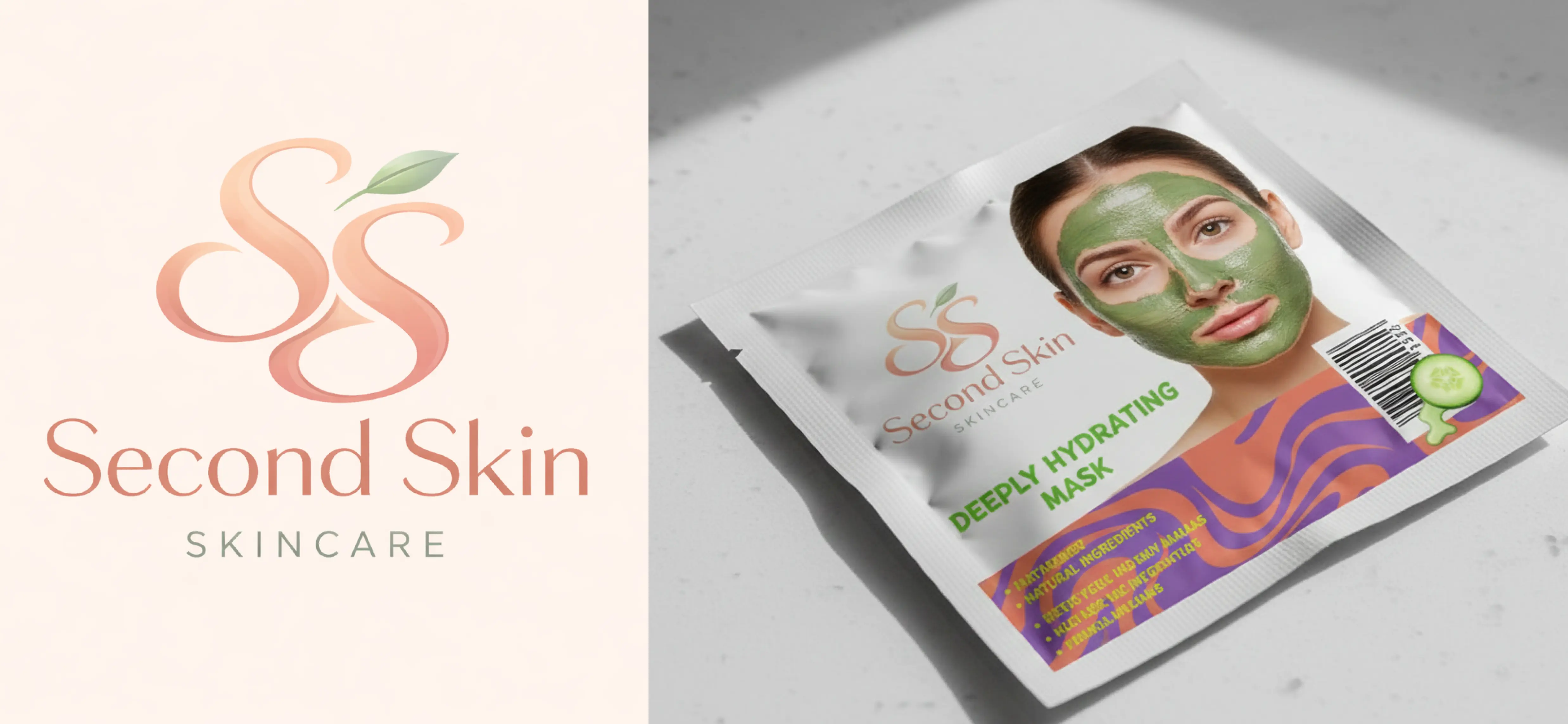
The initial concept for Second Skin existed as an idea rather than a comprehensive system. While the product category of skincare was clear, the brand lacked a distinct point of view that could separate it from a saturated market. The visual elements leaned heavily toward familiar beauty tropes. We saw soft colors, generic minimalism that didn’t feel premium, and an undefined sense of luxury that felt hollow rather than substantial.
The challenge here was not simply aesthetic inconsistency. The core issue was conceptual ambiguity.
The brand spoke about care. However, it failed to articulate why it existed or how it should be experienced by the customer. It lacked the "strategic backend" required to support a premium price point.
Key issues identified during our audit included:
- Lack of clear positioning within the luxury skincare space: The brand was floating in the middle ground, neither mass-market nor truly exclusive.
- Visual language too close to "clean beauty" conventions: It blended in with competitors rather than standing out.
- No emotional or conceptual anchor: There was no narrative hook to drive customer loyalty.
The brand needed clarity, not decoration. To understand how to change brand positioning effectively, one must first admit that the current positioning is not working. Second Skin was trying to be everything to everyone, which resulted in it being nothing to anyone.
Strategy: Redefining Luxury Through Restraint
The rebrand strategy centered around a single, pivotal question: What if skincare wasn’t about correction, but presence?
Most skincare brands position themselves as "problem solvers." They sell the idea that your skin is flawed and requires fixing. To carve out a unique niche, we decided to pivot away from this narrative entirely. From this inquiry emerged the core concept: Second Skin. We defined skincare as a layer, a quiet ritual, and something that remains rather than something that aggressively transforms.
This is the essence of how to transform a brand. You must change the conversation you are having with the consumer.
Strategic pillars defined early in the process included:
- Skin as a state, not a problem to be solved: We moved away from "anti-aging" or "correction" rhetoric.
- Luxury expressed through absence, not excess: True luxury is about time and space, not gold foil and clutter.
- Nature refined, not romanticized: We avoided the raw, crunchy aesthetic of organic products in favor of science-backed precision.
This strategic shift informed naming, tone of voice, visual identity, and packaging decisions. It provided the logical framework (the backend system) upon which the evocative design could be built.
The Psychology of Repositioning
When you are researching how to change brand positioning, you are essentially researching psychology. You are attempting to alter the perception in the mind of the consumer.
For Second Skin, we utilized a strategy of "intentional friction." We wanted the customer to pause. Standard luxury beauty brands scream for attention on the shelf. We decided Second Skin should whisper. By reducing the noise, we forced the consumer to lean in. This created an immediate intimacy between the product and the user.
This is where Veloura Solutions differentiates itself - we do not just design for the eyes. We design for the behavior we want to elicit. In this case, we wanted to elicit a sense of calm authority.
After: A System Built on Intention
The rebrand resulted in a cohesive system where every element serves a distinct commercial and emotional purpose.
The product line was restructured into three "skin states" rather than traditional skincare categories like "oily" or "dry." This is a prime example of how backend systems merge with branding.
The New Product Architecture:
- The Resting Skin: Focused on maintenance and balance.
- The Living Skin: Focused on protection and daily interaction.
- The Deep Skin: Focused on repair and overnight renewal.
This approach reframed the product experience from functional to emotional and intuitive. It allows the customer to self-select based on how they feel, not just what their dermatology report says.
Visual Identity and Materiality
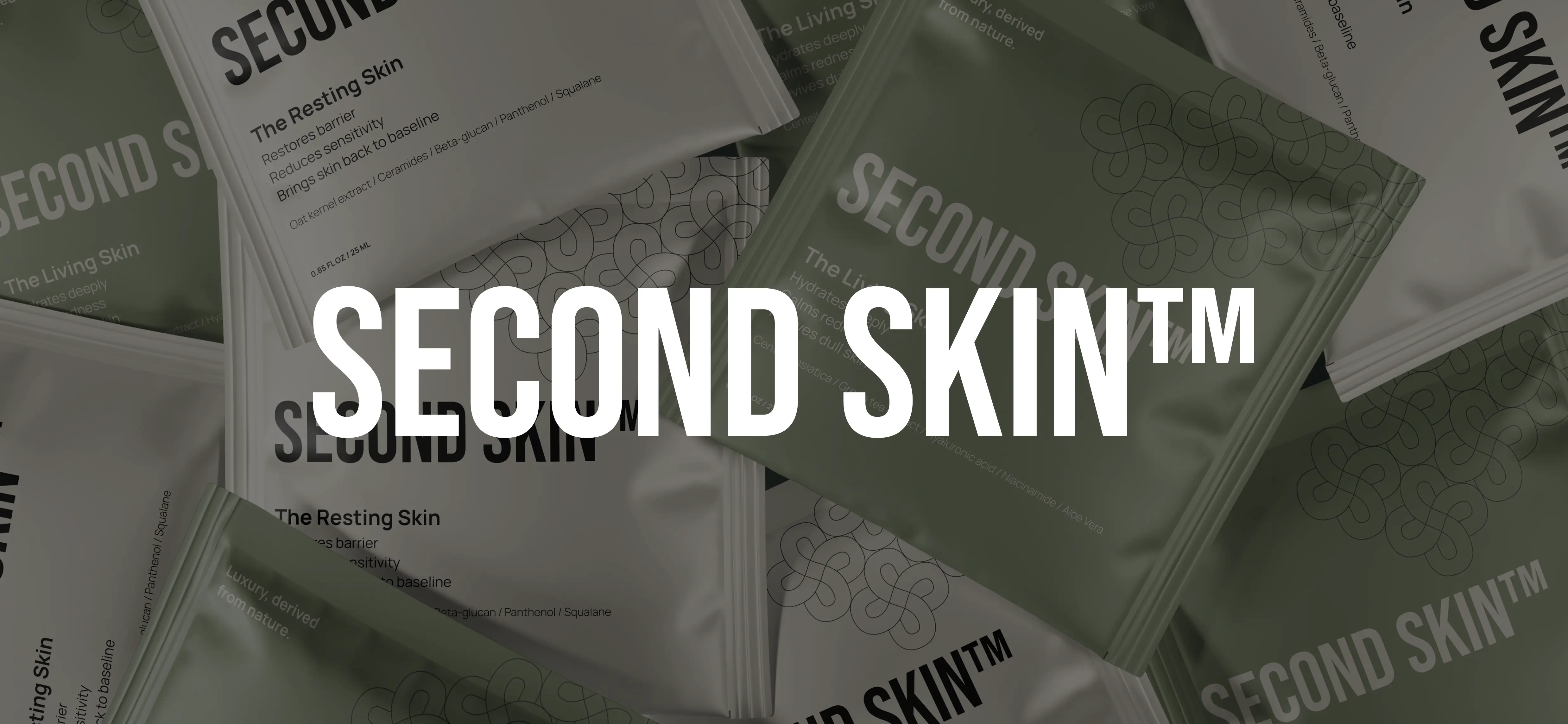
Visually, the identity became quieter yet significantly more confident. We utilized a restrained color palette of sage green, warm ivory, and deep graphite.
- Sage Green: Signifying nature, but a clinical, refined nature rather than a wild one.
- Warm Ivory: Providing a human, tactile softness that pure white lacks.
- Deep Graphite: Anchoring the brand with weight and seriousness, avoiding the severity of black.
These colors established hierarchy and depth. Bold sans-serif typography brought modern authority. We also introduced a subtle "SS" graphic element. This referenced layers and biological membranes without becoming overtly decorative or illustrative.
Packaging as Strategy
Packaging was reduced to small square sachets and precise, heavy vessels. This emphasized precision and control. Luxury was communicated through materiality, negative space, and tactile finishes rather than visual noise.
When you touch the packaging, it feels substantial. It communicates value before the user even reads the label. This is how to transform a brand from a commodity into an asset.
The Backend System: Scaling with Soul
At Veloura Solutions, we constantly emphasize that a brand is not just a logo; it is an operating system for your business.
For Second Skin, the "After" phase included a realignment of their operational approach. The "Three Skin States" architecture streamlined inventory management. It simplified marketing messaging. It made employee training easier because the philosophy was simple to understand and communicate.
By clarifying the brand positioning, we streamlined the business operations. This is the intersection where evocative design meets strategic backend systems. The brand can now scale because its foundation is solid. It is no longer guessing who it is.
Results: From Concept to Impact
The rebrand elevated Second Skin from a generic skincare concept into a distinct, editorial brand with a clear point of view.
Key outcomes included:
- Differentiation: The brand no longer competes directly with mass-market "clean beauty" brands. It sits in a unique "mindful luxury" category.
- Retention: The emotional connection built through the "ritual" narrative has increased repeat purchase rates.
- Clarity: Stakeholders and internal teams now have a clear "North Star" for future product development.
Most importantly, the brand now communicates intention, not just aesthetics. The clarity of the system translated into stronger recognition, increased engagement, and measurable business impact.
View full Second Skin Rebrand Case Study on our Behance profile
A Guide for Your Business: How to Approach Repositioning
If you are reading this case study and wondering how to change brand positioning for your own business, the process begins with honesty.
1. Audit the Soul of the Business Before you change a logo, you must identify what is currently broken in your connection to the customer. Is your visual identity promising something your operations cannot deliver? Or, like Second Skin, is your product excellent but your brand story too quiet?
2. Define the "Anti-Position" Sometimes it is easier to define what you are not. Second Skin decided it was not about fixing problems. This decision liberated the brand. Determine what clichés in your industry you refuse to participate in.
3. Build the System, Then the Visuals Do not start with colors. Start with the architecture. For Second Skin, the "Three Skin States" product architecture came before the packaging design. The strategy must lead the design.
4. Execute with Restraint When learning how to transform a brand, the temptation is to add more. More features, more colors, more claims. The most powerful brands usually do less, but they do it with absolute conviction.
Conclusion
The transition from Before to After demonstrates that effective rebranding is not about adding layers. It is about refining them. Strategy provided the foundation. Design became the expression. Restraint defined the outcome.
Second Skin is no longer just a skincare product. It is a considered experience that is applied lightly, absorbed quietly, and remembered long after.
If your business feels undefined or lost in a sea of competitors, it may be time to stop refreshing and start recalibrating. At Veloura Solutions, we specialize in this depth of transformation. We ensure your business scales not just with profit, but with soul.
Are you ready to start this transition?
We invite you to book an Aura Alignment Call with our CEO, Katarina. It is a 45-minute strategic deep dive session to identify the 'Aura Gaps' preventing your high-end scaling.
Please ensure your booking questions are completed in full so we can skip the preliminary fluff and focus entirely on the roadmap to your iconic brand status.

Ready to Reignite, Rebrand & Rise?
Let’s Talk About Where Your Brand Is — And Where It’s Meant To Go.